

OLIVE HILL, KY, November 10, 2026 (MusicWire) -- Once known for his political activism and firearms advocacy, Frank Valentine, born Farukh Abdullayev and now recording music under the name The Follower of Christ, has taken an extraordinary journey from America's political battlegrounds to the secluded Appalachian woods of Kentucky.
A firearms enthusiast, Second Amendment advocate, entrepreneur, and creator of the YouTube channel Firearms of America, Valentine spent years discussing firearms, political issues, and constitutional rights. He attended political conferences, spoke at events, interviewed prominent figures, and built an audience around subjects he knew intimately.
Then, he disappeared. His political activities stopped. His podcast ended. To those who had followed his career, the change raised an obvious question: What happened?
Journalist Megan Lewis, who had interviewed Valentine in 2021, recently reconnected with him to find out. What emerged was not simply the story of a political activist changing careers. It was the story of a man who walked away from much of his former life, retreated into the Appalachian wilderness, and began creating an extraordinary volume of music dedicated to Jesus Christ.
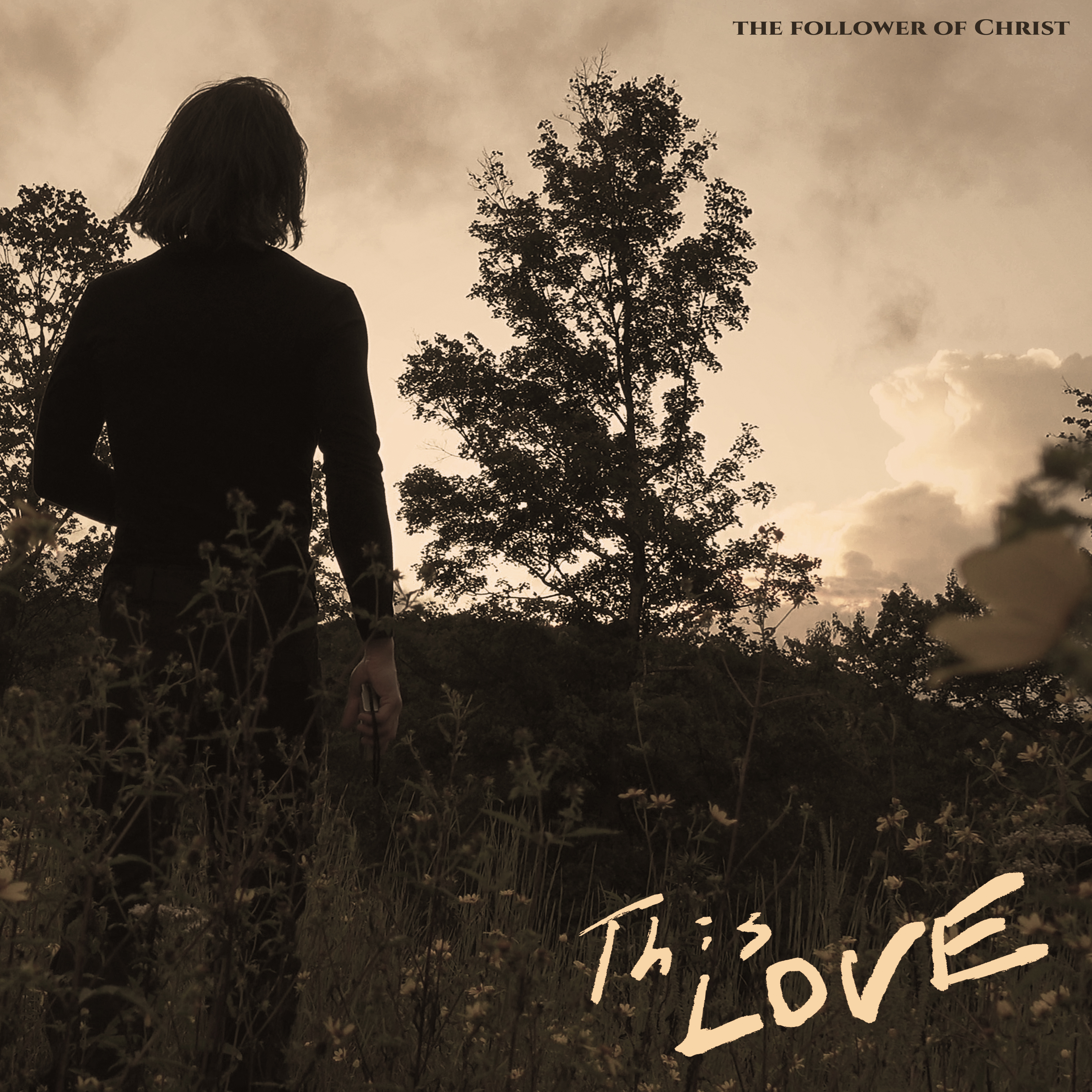
Today, recording under the name The Follower of Christ, Valentine is preparing to release a new production of This Love, arriving November 11, 2026. The song was born during a period when he believed his days might be numbered.
A Baptism and an Unexpected Encounter
Valentine's transformation began shortly after his previous interview with Lewis. Having decided to be baptized, he approached several pastors but found himself uncomfortable with the formal requirements surrounding the ceremony. Eventually, he turned to his friend Alex, who agreed to baptize him in a Florida river. Close friends gathered to witness the occasion.
Yet he describes another encounter as an even more profound spiritual turning point. While traveling from Florida to a political conference in Kentucky, Valentine and his friends stopped in Nashville. During an evening exploring downtown, they encountered a man in a wheelchair named Jeff.
The meeting began under unsettling circumstances. Jeff had survived a brutal assault that left him severely injured. He described the anger he had experienced toward his attacker and how his faith in Jesus had prevented him from pursuing revenge.
As the conversation continued, Valentine witnessed a striking change in the man's demeanor. What began as an uncomfortable confrontation became a deeply personal conversation about suffering, forgiveness, and faith. Before they parted, Jeff gave Valentine a wooden cross he had made before his injuries. Although he had already been baptized in water, he describes his experience in Nashville as something closer to a baptism in the Spirit.
The experience followed him to Kentucky. While attending the political conference, Valentine found himself increasingly drawn away from the scheduled activities and toward time alone outdoors. He began questioning whether the confrontational world of politics was where he truly belonged.
Walking Away From the Fight
For years, Valentine had thrived in environments built around argument and confrontation. Political debates came naturally to him. He enjoyed challenging opposing views and defending his convictions.
But his growing faith forced him to examine not only what he believed, but how he treated people who disagreed with him. He began recognizing pride, aggression, and anger in his own behavior. He also began questioning whether winning arguments was accomplishing anything meaningful. Eventually, he withdrew from political activism.
His interest in the Second Amendment and firearms training, however, did not disappear. During their recent conversation, Lewis raised a challenging question: How did Valentine reconcile his longstanding belief in the right to bear arms with Jesus' warning that those who live by the sword will die by the sword? Valentine explained that he had wrestled with the question for years.
His fascination with combat, martial arts, military history, and unconventional physical training began in adolescence. Although he never served in the military, he spent years studying tactics and developing practical skills under experienced instructors.
He also recalled meeting Sam Childers, widely known as the Machine Gun Preacher, whose efforts to protect children in conflict-affected regions of Africa had deeply influenced him. For Valentine, Childers represented an example of a man willing to risk his life in service of what he believed was God's calling.
Valentine's interpretation of Jesus' warning centers on responsibility. Whether a person picks up a guitar or a rifle, he believes that person assumes responsibility for how the instrument is used and for the consequences of those choices.
His constitutional convictions have not fundamentally changed. What has changed is where he places his trust. Governments change. Laws change. Political movements rise and fall. Valentine believes that his ultimate responsibility is not to a political movement but to Jesus Christ.
Finding Solitude in the Appalachian Woods
As Valentine withdrew from public life, he began dismantling the world he had spent years building. Businesses were closed. Possessions were sold or given away. Eventually, he moved into the wooded hills of Appalachian Kentucky.
There, surrounded by nature and largely removed from his former social environment, he devoted himself to studying Scripture, spending time outdoors, and making music. For a period, rock climbing became a daily activity. He explored the surrounding wilderness, climbing during daylight and sometimes continuing through the night.
Meanwhile, faith-driven songs continued accumulating. Every day, he would pick up his guitar and sing privately to the Lord. The songs were an expression of worship.
Around the same period, Valentine became increasingly involved in apologetics. He enjoyed discussing theology with people from different religious backgrounds. Yet he was surprised by the intensity of disagreements within Christianity itself. The debates frequently became confrontational, reminding him of the political environment he had left behind.
Once again, he withdrew. Music, prayer, Scripture, and solitude became the center of his daily life. Then his health began to deteriorate.
The Health Crisis That Changed Everything
During the summer of 2025, Valentine began experiencing persistent chest pain. The symptoms continued for more than a month and appeared to be worsening. Living alone in the woods, Valentine came to believe that his days might be numbered.
Although he had made peace with the possibility of death, one concern remained: the songs he believed the Lord had given him might never be preserved. He decided he could no longer leave the songs unrecorded.
Within roughly six weeks, Valentine recorded 81 acoustic songs across nine albums, with nine songs on each album. The performances were deliberately simple. One man, one guitar, and songs of faith. He released the recordings under the name The Follower of Christ.
Working independently, without a record label or management, Valentine had no commercial intentions for his music. He made his songs freely available, welcoming others to listen, share, cover, and reinterpret them.
By the time the final album was published, Valentine had fulfilled what he believed might be his last responsibility as a musician. With the songs preserved, he began preparing for the possibility of his own death, even starting to write a will for his children.
Healing
One morning, while eating breakfast and listening to the Gospel of Luke, Valentine heard Jesus' parable of the rich fool. In the biblical account, a wealthy man accumulates more grain than he can store and decides to build larger barns. But God warns him that his life will end that very night, rendering his accumulated possessions meaningless. The passage struck Valentine with unexpected force.
Behind his house stood an enormous pile of firewood. He had collected it as a precaution against emergencies, believing it would provide security if he ever lost electricity or heat. But after sitting outdoors for approximately two years, much of the wood had become heavily moldy.
Valentine began wondering whether the decaying wood might be contributing to his health problems. He removed and burned the pile. According to Valentine, his chest pain began improving the following day and disappeared within approximately a week.
Valentine believes the Lord used the experience to teach him a lesson about misplaced security and to reveal that his work was not yet finished. The cause of his symptoms was never medically established in this account, and the improvement does not by itself confirm that mold exposure was responsible.
Whatever the medical explanation, the experience profoundly changed his priorities. Surviving the health crisis gave him a new ambition. He was ready to do more.
Selling Firearms to Build a Recording Studio
Valentine believed that if he had been given another opportunity to live and create music, he had a responsibility to make the most of it. Following his recovery, Valentine received another song: Redemption. Unlike the acoustic recordings he had rushed to preserve, this new composition inspired him to pursue a far more ambitious sound. He began investing in instruments, amplifiers, recording equipment, and music-production technology.
There was one problem. After closing his businesses and spending an extended period away from conventional work, his financial resources were running low. So he began selling firearms and tactical equipment accumulated during his previous career. He used the proceeds to purchase guitars, amplifiers, pedals, and other musical equipment.
But learning to produce the sound he envisioned proved difficult. Valentine spent months experimenting with guitar tones, microphones, and strings, auditioning pedals, studying recording techniques, and learning how to build complete arrangements.
His days became consumed by music. Hours disappeared into experimentation. Progress was often frustrating. Yet he remained convinced that if the Lord had given him these songs, he should develop the skills necessary to present them as powerfully as possible.
Then another unexpected development occurred. Years earlier, Valentine's YouTube channel had been demonetized following a video discussing a controversial leaked recording. He subsequently became involved in litigation concerning social media platforms.
After being interviewed by attorneys and accepted into the case, he heard nothing for years. He assumed the matter had ended. Then, just as he was selling his former equipment to finance his music, a private investigator contacted him. An attorney informed him that a payment was waiting for him in connection with the litigation.
The money helped him purchase additional professional recording and performance equipment. Valentine interpreted the timing as another example of divine provision.
He continued developing his musical abilities, expanding into electric guitars, synthesizers, drums, audio engineering, mixing, mastering, and filmmaking. By January 2026, he had completed his first fully produced recording of Redemption, marking the beginning of a new chapter in his musical journey. More songs followed. What began as a private collection of acoustic worship songs had developed into a full-time creative pursuit.
The Song That Started It All
Valentine's latest project brings his musical journey back to its beginning. The song is called This Love. It was the first song he recorded during the period when his health was failing. It also became the opening track of his first acoustic album, which shares the same title.
But its significance goes beyond chronology. Valentine received This Love around the time his chest pain first began. As he practiced his growing collection of songs each day, this particular composition stood out.
When he finally decided to begin recording, This Love was his first choice. Its simple arrangement of voice and acoustic guitar revealed something he had not anticipated: the songs could stand on their own without elaborate production. That realization encouraged him to continue recording until all 81 songs had been preserved. In that sense, This Love helped initiate the recording project that eventually produced nine acoustic albums.
Now, more than a year later, he has returned to the composition. This time, the production is far more ambitious. The new recording incorporates electric guitars, drums, bass, synthesizers, and layered arrangements, bringing together the production skills he has developed since his first acoustic recordings.
Working entirely from his home studio in the Appalachian woods of Kentucky, Valentine performs and records every instrument himself, while also handling the arrangement, production, mixing, and mastering. The new version of This Love is both a musical production and a personal testimony and is scheduled for release on November 11, 2026.
Watch the official “This Love” music video.
A Prayer for Revival
Near the conclusion of their conversation, Lewis asked Valentine what he ultimately hoped his music would accomplish. His answer began close to home. He already sees positive changes in his family and children. He values the example of a father dedicating himself wholeheartedly to something he believes in.
He also describes the experience of creating music as a form of spiritual presence: becoming so immersed in the work that the distractions of everyday life fall away. But his aspirations extend far beyond his household. He hopes that people will listen to his songs, sing them, and find joy in their relationship with Jesus Christ.
Above all, he hopes the music might contribute to something larger. The revival of the Church. Valentine believes that the world is approaching a moment when people may be ready for a spiritual awakening. He envisions a revival that transcends denominations, national boundaries, and established religious institutions.
At the center of that vision is his conviction that Jesus Christ is God. He hopes for a worldwide movement of people turning toward Jesus, rejoicing in their faith, and preparing for His return. Lewis responded positively to his hopes, expressing a similar desire to witness revival within their generation. For Valentine, the possibility of contributing to that awakening gives his work its deepest meaning.
He does not know how many people will hear his songs. He does not know whether his music will reach a large audience. And he does not know where the next chapter of his life will lead. But after leaving politics, retreating into the woods, emerging from a period when he believed his life might be nearing its end, and rebuilding his life around music, he believes one thing has become clear.
His purpose is no longer defined by the battles he once fought. It is defined by the faith he now hopes to share. And now, with This Love, his journey has come full circle. What began as a song he thought he might leave behind has become the song with which he begins again.
Connect with The Follower of Christ:
Instagram | YouTube | Apple Music | Website
About
The Follower of Christ is more than an artist name for Frank Valentine, born Farukh Abdullayev. It is a declaration of his faith and the identity he has embraced in Jesus Christ.
Formerly known for his political activism, Second Amendment advocacy, and YouTube channel Firearms of America, Valentine stepped away from politics and public life, eventually settling in the Appalachian woods of Kentucky, where he devoted himself to writing and recording music.
An independent multi-instrumentalist, he performs, records, produces, mixes, and masters his music from his home studio. His work spans acoustic worship, rock, and orchestral arrangements, with a focus on sharing his testimony, encouraging spiritual revival, and celebrating the joy of knowing God.